
The Jensen Huang case shows why boards of strategically important companies need accountability, succession planning and clearer limits on executive power
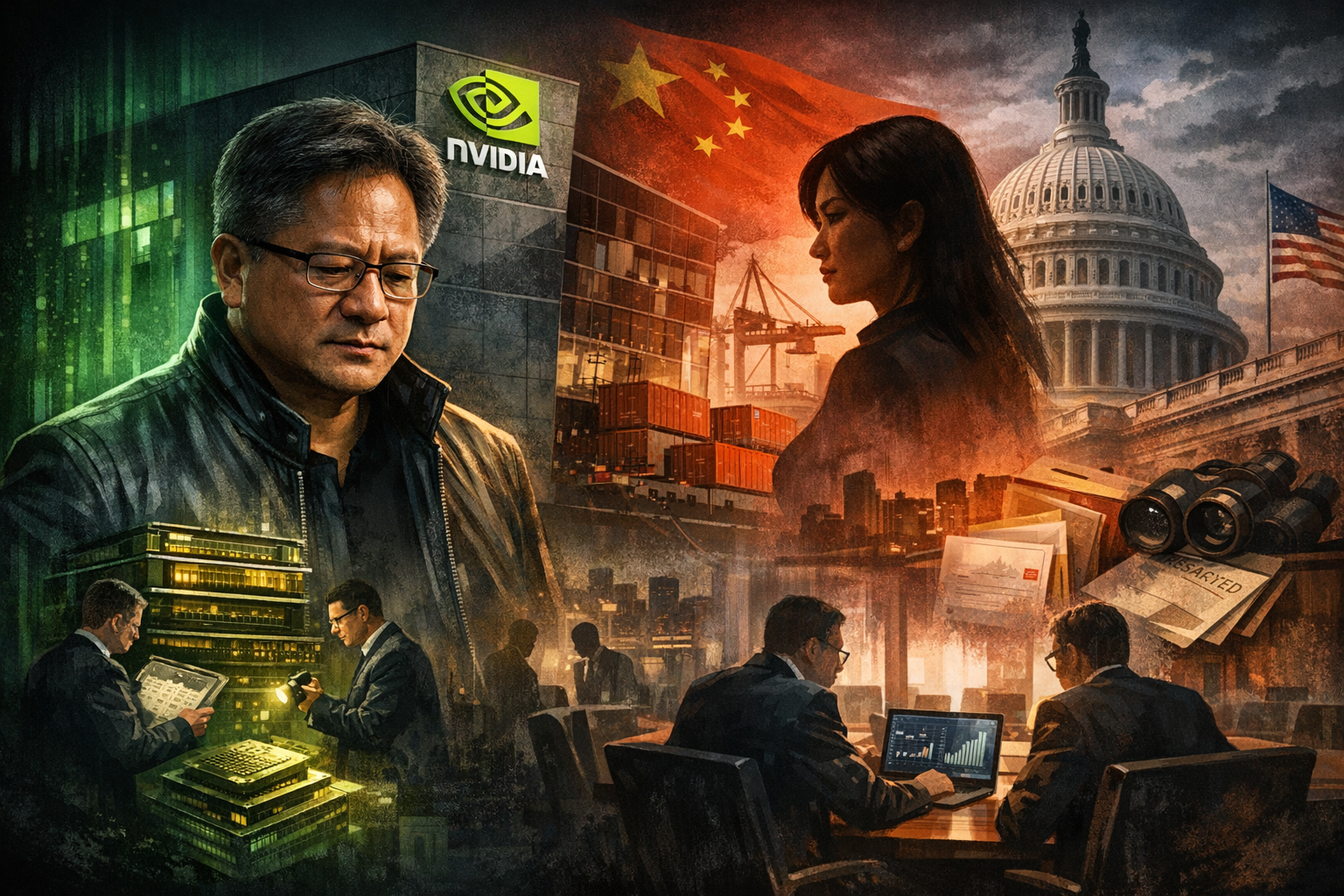
Jensen Huang has resigned as chief executive of NVIDIA after allegations involving a relationship with Alice Huang, an executive associated with Megaspeed, a nominally Singaporean artificial-intelligence company. The allegations have widened into questions about whether chips were being channelled to China through a front operation, and whether the US State Department had been aware of the activity for months.
The episode has therefore moved well beyond a private lapse in judgement. NVIDIA is described as one of the most important companies in the AI economy, with substantial influence over markets, data-centre investment and national security. When a company of that importance is also heavily identified with one founder, a personal failure can become a governance event, an operational risk and a question for public institutions.
Accountability becomes harder when the executive appears indispensable
The board’s decision was difficult because Huang’s value to NVIDIA extended well beyond his formal title. He was widely connected with the Trump administration, had an unusually prominent role in the technology sector and appeared to be the central figure in a company whose market importance had made it highly visible to investors and governments. Removing such a leader can create concerns about customers, political relationships, strategic continuity and the company’s ability to operate at the same level.
That difficulty does not remove the board’s responsibility to act. The reported conduct involved potential corporate espionage and the alleged movement of strategically sensitive chips, while a second affair was also said to have emerged. Against that backdrop, allowing the executive’s influence or perceived irreplaceability to override accountability would have exposed the company to a deeper institutional failure than the original misconduct.
The case also raises a question about what the board knew and when it knew it. Directors will need to determine whether the relationships and associated activities were a well-known but carefully contained secret, or whether they came as a genuine surprise. That distinction bears directly on the adequacy of oversight, internal reporting and the board’s understanding of risks surrounding a founder with extensive personal and political reach.
Strategic importance magnifies personal and geopolitical exposure
NVIDIA’s position gives the allegations consequences that would not attach to an ordinary executive scandal. The company sits within a circular AI economy in which chip funding, data-centre investment and demand for computing capacity reinforce one another, so disruption at one major participant can affect expectations across the sector. The immediate market reaction, including a sharp decline before a subsequent recovery, reflected concern about the company’s dependence on its leader as much as concern about the allegations themselves.
The potential China connection adds another layer of uncertainty. Reports described Alice Huang, CEO of Megaspeed, may have manipulated Jensen Huang to funnel chips into China, although the extent and purpose of any such arrangement remain matters for investigation. Earlier discussions about whether NVIDIA would receive approval to sell some chips to China, followed by reports that approval was granted, have intensified questions about what official and unofficial channels may have influenced those decisions.
Congressional scrutiny is expected to focus on those unresolved issues, including whether government agencies were monitoring the activity and why it was not stopped if officials had identified a problem. Testimony may occur behind closed doors because of national-security concerns, but the subject is unlikely to remain contained once investigators, legislators and the market begin examining the connections among corporate decisions, export policy and political access.
Succession planning is a test of enterprise value
The leadership transition exposes a separate weakness: the apparent absence of a developed succession plan. Huang reportedly had about 60 direct reports, an unusually flat structure that may have helped NVIDIA remain close to customers and move quickly in a dynamic market, yet the same arrangement made it less obvious who could take over when the founder was removed.
Colette Kress, the current Chief Financial Officer, was identified as interim CEO, but an interim appointment does not resolve the broader question of organisational resilience. A company can be highly agile in its markets while remaining vulnerable at the top if decision rights, strategic relationships and investor confidence are concentrated in one person.
For directors, succession planning is therefore connected to enterprise value rather than reserved for a scheduled retirement. The relevant test is whether the organisation can sustain performance if its founder or chief executive suddenly becomes unavailable, and whether investors can see enough credible leadership depth to avoid turning a personnel event into a destabilising market event.
The structure that gave NVIDIA speed may still prove valuable, but it requires stronger institutional safeguards around the individual at its centre. A flat organisation with 60 direct reports can support rapid access and customer proximity, while also making accountability, delegation and leadership continuity more difficult to assess.
Huang is expected to remain influential in the technology sector, with reports that other companies would be willing to hire him. That prospect underlines the limits of reputational punishment in industries where scarce expertise commands strong demand, and it places greater responsibility on boards to establish boundaries before a crisis rather than relying on the market to impose them afterwards.
NVIDIA’s response offers some evidence that corporate institutions can still hold a powerful founder accountable, even when the company is central to economic and national-security interests. The unresolved investigations will determine whether that accountability reached beyond the resignation, including the board’s oversight, government involvement and the mechanisms through which sensitive business was conducted.
For directors elsewhere, the lasting issue is whether their organisations can withstand the removal of a dominant leader without losing strategic momentum or public trust. Companies operating in critical industries need the agility to compete, but they also need governance systems strong enough to ensure that influence, wealth and access do not place any executive beyond scrutiny.